The natural world has always been my touchstone—where I feel happiest, most at peace, and most alive. Outdoors, my body and mind come into balance; my heart lifts simply from being here, breathing in the beauty that surrounds us.
Since childhood, I’ve found joy wandering through gardens, forests, and coastal paths. I was born in India, where my early explorations were watched over by my Ayah, ever mindful of the creatures that shared the garden. When my family returned to Denmark, summer opened wide with freedom. The long, silver-lit days at my grandmother’s village near Copenhagen became a kind of paradise.
I spent hours roaming the beech woods, tasting beechnuts, wading through clear streams, and learning to catch small fish with my toes—always curious about every living thing and eager to understand its world.
At my grandmother’s home, nature became both kitchen and apothecary. We gathered violets to crystallize, elderflowers for fragrant drinks, and rose hips—our “fruits of the gods”—for jam. These early lessons in observation and gratitude shaped the way I see the earth even now.
When my family immigrated to California, I felt unmoored. The light, the landscape, even the rhythm of the days were unfamiliar. Sensing this, my father gave me a small garden plot of my own. It was a simple gesture, but it gave me something essential—a way to belong again.
From then on, I was always growing something. In the early 1970s, I worked in an organic garden in Lake County, and later, in Sonoma, I tended an acre of land with my young family, growing food and learning, season by season, how to live more closely with the land.
Life’s practical paths led me into other creative work. For many years, I worked as an artist and designer, crafting deerskin clothing and one-of-a-kind pieces from reclaimed materials. Yet even then, my connection to the natural world never left me—I found myself always drawn back to gardens and wild places.
That pull led me to the Marin Art and Garden Center, just over the hill from my studio. I joined the Garden Society and quickly fell in love with the Center’s eleven acres of remarkable landscape. But I also sensed that the gardens themselves were waiting—quietly—for renewal.
I proposed a simple idea: to bring life, learning, and ecological purpose back into those spaces. What began as a small role grew into years of building gardens, working with volunteers, and creating programs that connected people more deeply with the living world.
In time, I returned fully to this path—studying natural history, becoming a Marin Master Gardener, and continuing to learn through hands-on practice. This work eventually led to the founding of Home Ground Habitats, where growing plants and growing understanding are inseparable.
And so began a new chapter—as a gardener, naturalist, educator, and always a student of the wild. Every seed, every garden, every creature reminds me of our place within the living earth—and of the possibility of living in greater harmony with it.
In 2011, Charlotte founded Home Ground Habitats — a nonprofit native plant nursery and educational center rooted in the belief that gardens can restore ecological balance while nourishing the human spirit.
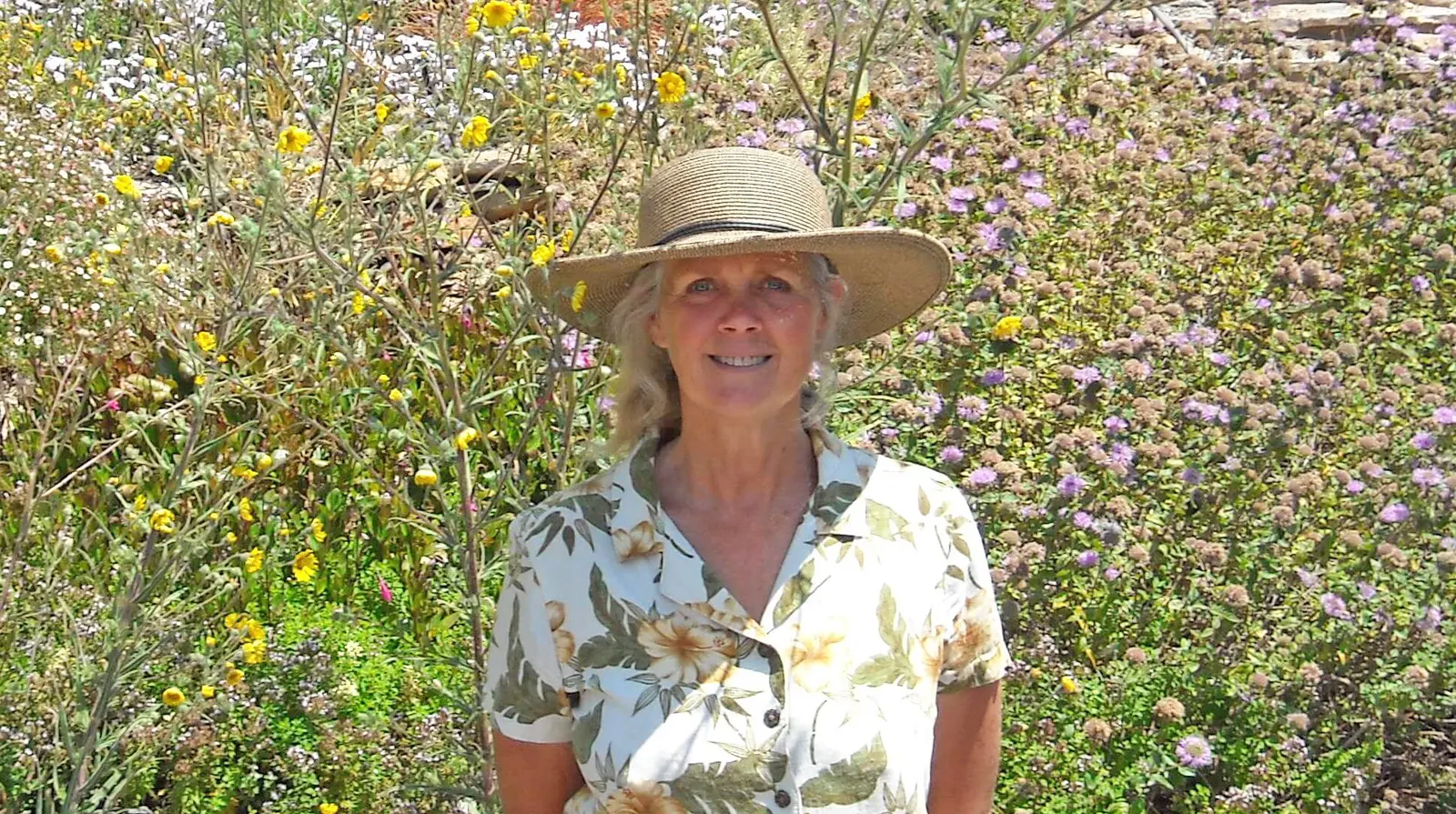
Charlotte in the habitat garden, 2010
What began as a small, volunteer-driven effort has grown into a vibrant community resource. Through Home Ground, Charlotte has helped bring native plants and habitat education to schools, public gardens, and restoration projects throughout Marin County.
Volunteers at Home Ground do more than propagate plants — they carry forward knowledge, skills, and a shared vision for a more sustainable relationship with the land.
For decades, Charlotte has been a teacher as much as a gardener. She has led countless classes, workshops, and hands-on demonstrations — sharing knowledge of plant propagation, habitat gardening, composting, and the intricate relationships between plants, insects, and wildlife.
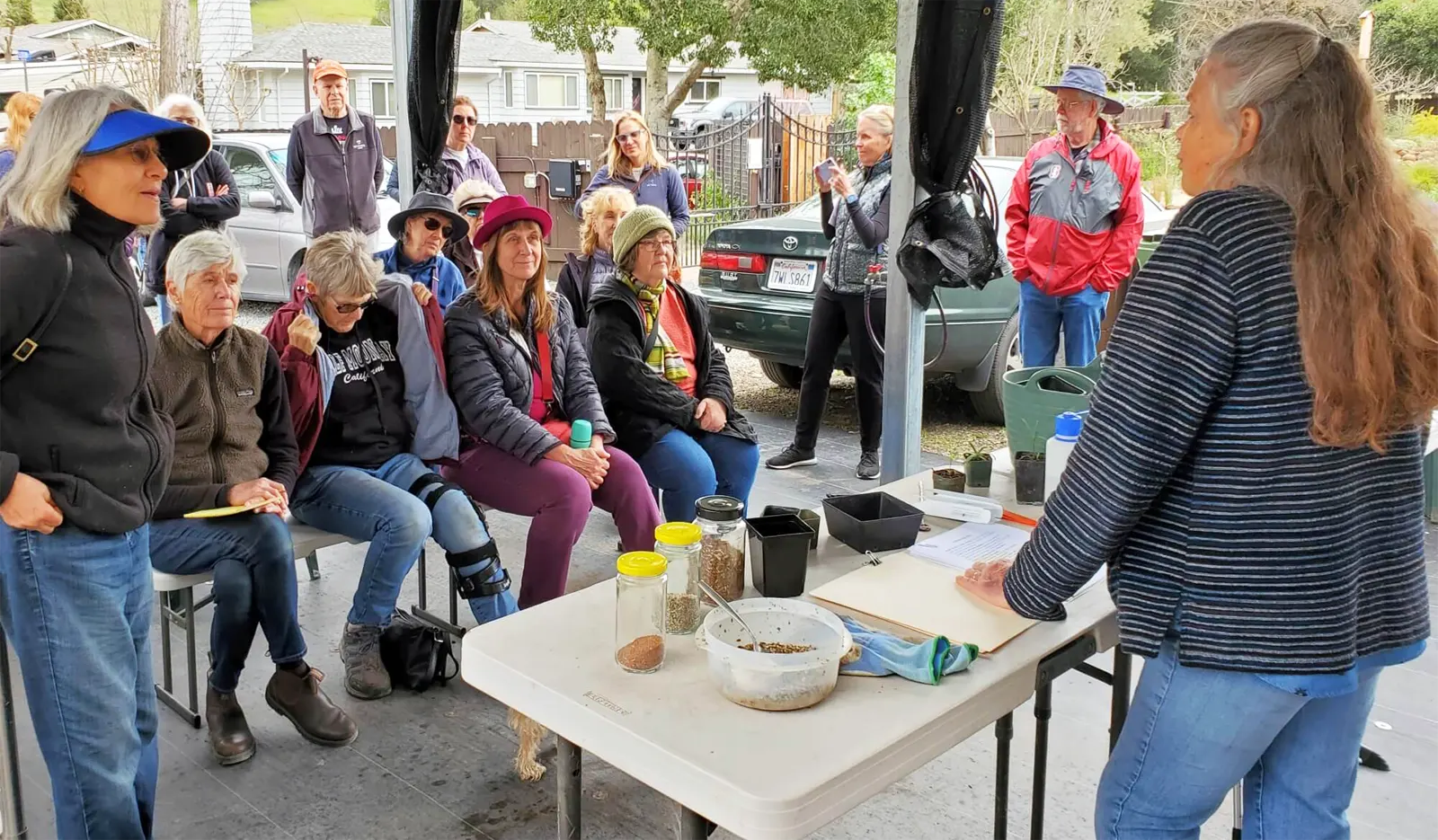
Charlotte teaching plant propagation class
Her work has reached gardeners, students, and educators across the region through partnerships with organizations such as the California Native Plant Society, Marin Municipal Water District, botanical gardens, and local schools.
Whether in a classroom or a garden, her approach remains the same: to guide others in observing, understanding, and working with nature rather than against it.
Charlotte’s work has helped shape a broader movement toward ecological gardening in the North Bay and beyond. She has served in leadership roles with the California Native Plant Society and contributed to influential educational efforts, including the Watershed Approach to Landscaping initiative.
Her gardens and projects have been recognized for their beauty, sustainability, and ability to inspire others to embrace native plants and habitat restoration.
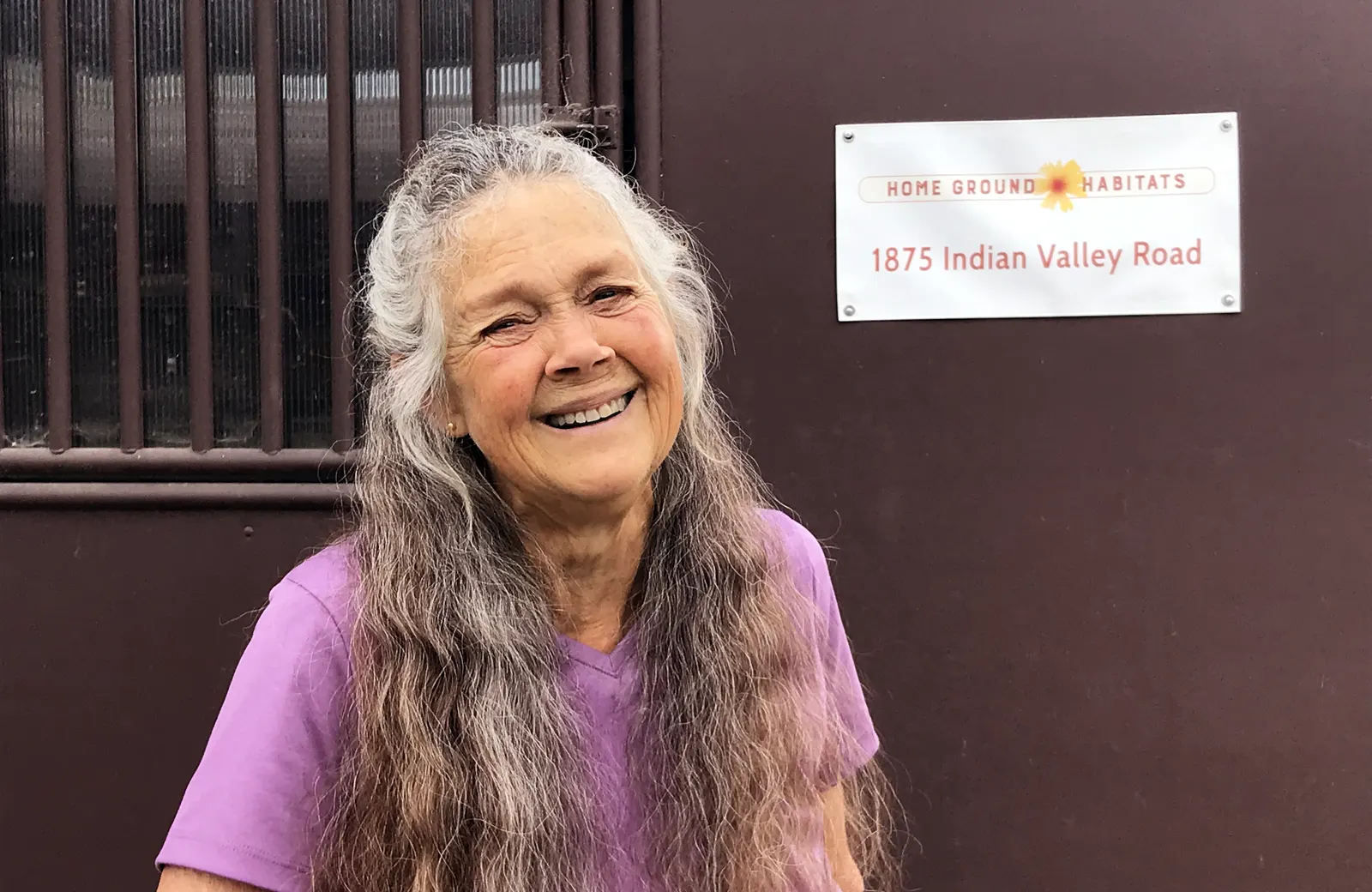
Charlotte at the Home Ground Habitats, 2022
Even now, Charlotte continues to tend her own land in Novato — working with native soils and plants to create a place of refuge for both people and wildlife.
For her, the garden is never finished. It is always growing, always teaching.
Novato plant nursery transforms Marin garden
Marin Independent Journal, January 2026
Charlotte Torgovitsky’s Novato Garden
Flora, Summer 2018
Go Native
Marin, March 2017
Building a Habitat Garden
Wildcare, Spring 2016
My Home Ground: Inspiration for a Habitat Garden
Fremontia, January 2013
The Untamable Beauty of California’s Wildflowers
Pacific Horticulture, October 2008
Thistle Lovers All: The Cobwebby Thistle as Habitat
Pacific Horticulture, April 2008