The Diverse World of Salvias in California
California is home to a number of different Salvia species; many of them are large flowering shrubs, some are small creeping perennial plants, and a few are annuals. Salvias belong to the Mint family (Laminaceae) and share many of the same characteristics as well-known mints, such as tubular flowers, fragrant foliage, and often almost square stems—an oddity in the natural world.
The Meaning and Medicinal Uses of Salvias
The genus name Salvia is derived from ‘salvare’, meaning to heal or save, and ‘salvus’, meaning uninjured or whole. Many Salvias have medicinal qualities and have been used by humans for centuries. Some notable examples include:
- Clary Sage (Salvia sclarea), also known as ‘Eyebright’, valuable as an eye wash.
- Common Sage (Salvia officinalis), widely used as a culinary herb.
- Chia (Salvia columbarae), known for its energizing effect.
- White Sage (Salvia apiana), an important ceremonial and cleansing plant for Native Peoples.
Interestingly, a ‘sage’ is a person of profound wisdom, and Salvias are often named ‘sages’, possibly as a tribute to their many beneficial uses. Notably, California sagebrush (Artemisia californica) is not a Salvia but rather a member of the Aster family. It earns the common name due to its medicinal and ceremonial applications.
Salvias in a Habitat Garden
Salvias are wonderful plants for a habitat garden, providing essential resources for a variety of creatures. They offer:
- Nectar and pollen for bees and other pollinators.
- Seeds for birds and small mammals.
- Cover and nesting sites for birds.
Salvias are particularly beneficial for hummingbirds, which forage these plants continuously. As they take in nectar, they also consume tiny insects that are vital to their diet, especially when raising their young. While hummingbird feeders are enjoyable for humans, having a Salvia blooming in your habitat garden every month of the year is even more beneficial.
Salvias and Their Blooming Seasons
Early Bloomers
The first of California’s native Salvias to bloom, as early as February and still in full bloom by late March, is Brandegee’s Sage (Salvia brandegii). In my home garden, a mature specimen spreads about 11 feet by 9 feet, cascading down a hot sunny slope while spreading by roots. Hummingbirds find ample nectar and insects in each flower, while Scrub Jays and Rufous-sided Towhees utilize the plant for shelter on alternating years.
Mid-Spring Bloomers
Following soon after are:
- Purple Sage (Salvia leucophylla), a vigorous spreader with the ‘Pt. Sal Spreader’ cultivar reaching 2 to 3 feet in height and spreading 7 to 9 feet.
- Munz’s Sage (Salvia munzii), a shrubby desert species with small blue flowers.
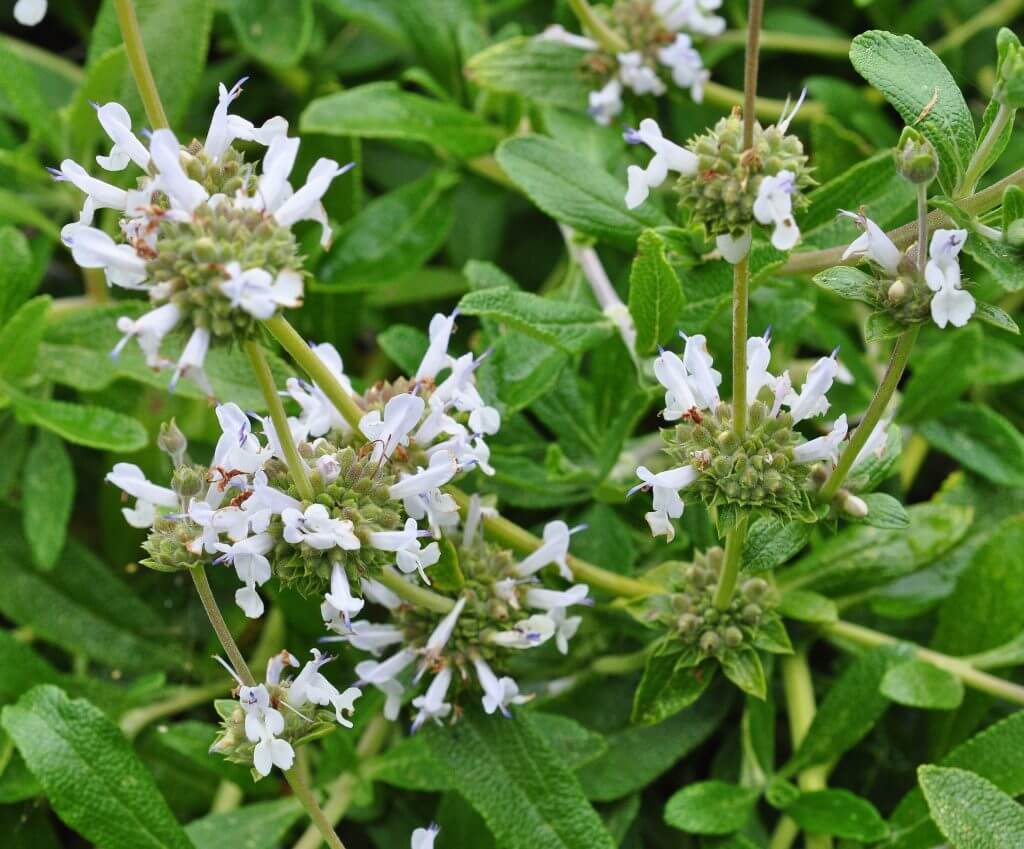
- Black Sage (Salvia mellifera), producing small white flowers favored by bees and beekeepers. This is the only shrubby Salvia found naturally in Marin County, with useful garden varieties including a shrub form (4 feet high, 3 feet wide) and a spreading form known as ‘Terra Seca’.
Late Spring and Summer Bloomers
- Cleveland Sage (Salvia clevelandii), starts blooming in May with blue flowers arranged in whorls on stalks rising above the plant. While the straight species requires excellent drainage, named cultivars such as ‘Pozo Blue’, ‘Winnifred Gilman’, and ‘Allen Chickering’ are excellent garden choices.
- White Sage (Salvia apiana), a smaller shrub standing 3 to 4 feet tall and wide, but in early summer towering flower stalks can reach an impressive 7 feet. Its white foliage is highly fragrant, and though its small white flowers are not showy, they are beloved by bees.
- Little-leaf Salvias (Salvia microphylla) are wonderful small stature shrubby perennials available in a beautiful array of colors; from whites and pale yellow, to pinks and reds, to blues and purples. The best known of these small Salvias might be ‘Hot Lips’, with a red and white flower! These plants are drought tolerant and mostly deer-proof, and can add touches of color to any sunny border planting.
Growing Salvias in Your Garden
California’s native Salvias are highly drought-tolerant, and many are deer-resistant. At Home Ground, we cultivate most of the native species, as well as a number of Salvias from the Mediterranean region, Mexico, and Central and South America. While they share characteristics with native varieties, these exotic Salvias help create greater biodiversity, add beauty and color, and extend the season of resources in a habitat garden sanctuary.
By incorporating a variety of Salvias into your garden, you can enjoy vibrant blooms year-round while supporting a rich ecosystem of pollinators and wildlife.
Visit Home Ground Habitats in Novato
Home Ground Habitats offers a wide selection of Salvia plants and seeds for sale, along with many planted in our gardens so you can see them in their mature form and observe the wildlife they attract.
We welcome you to visit during our open hours—Mondays, Wednesdays, and Thursdays from 1 to 4 PM—to explore, purchase plants and learn more about creating a habitat garden.
You can view our full plant inventory at Calscape.org.
Every purchase helps support our mission to donate habitat plants and provide educational opportunities to local schools and community projects. Your support makes a direct impact on fostering biodiversity and sustainable gardening in our communities.
You can purchase our organic seeds on our website here
Return to Plant of the Month