Monarch butterflies have evolved in close relationship with a single group of plants: milkweeds. These plants, often found in grasslands and meadows, are essential to monarch survival — their caterpillars feed on no other plant genus. Without milkweed, there are no monarchs.
Monarchs are also famous for one of the most remarkable migrations in the insect world. Each year, generations of butterflies travel thousands of miles between inland breeding grounds and coastal or Mexican overwintering sites — a phenomenon scientists have only recently begun to fully understand.
Below are a few foundational facts about these beloved butterflies:
- Monarchs are insects that undergo complete metamorphosis
(egg → larva → pupa → adult). - Their four life stages are: egg, caterpillar, chrysalis, and adult butterfly.
- In the United States, two regional populations exist:
— Western monarchs overwinter along the California coast.
— Eastern monarchs overwinter in central Mexico. - There is no genetic difference between these populations, and occasional mingling likely occurs.
- The migration spans multiple generations. Butterflies that leave overwintering sites in spring do not return themselves, their descendants make the return journey in fall.
- Summer adults live only 3—5 weeks, while overwintering adults can live 3—5 months.
What makes monarch migration extraordinary is that it is not an individual journey — it is a relay across generations.
Navigate on this page:
Metamorphosis of the Monarch Butterfly
Monarch Migration
Natural Enemies at All Stages
Monarchs in Marin County
I use the Monarch butterfly (Danaus plexippus) as a lens through which to explore basic butterfly biology. Over many years of study — through coursework, workshops, research, and countless hours observing caterpillars and adult butterflies — I have learned that careful observation can reveal extraordinary ecological relationships.
I have raised monarchs and other caterpillar species for over twenty years. While monarchs are well studied, many butterfly species are not. Their host plants may be poorly documented, and their larvae rarely seen. Observant habitat gardeners can still contribute meaningfully to our collective understanding of these species.
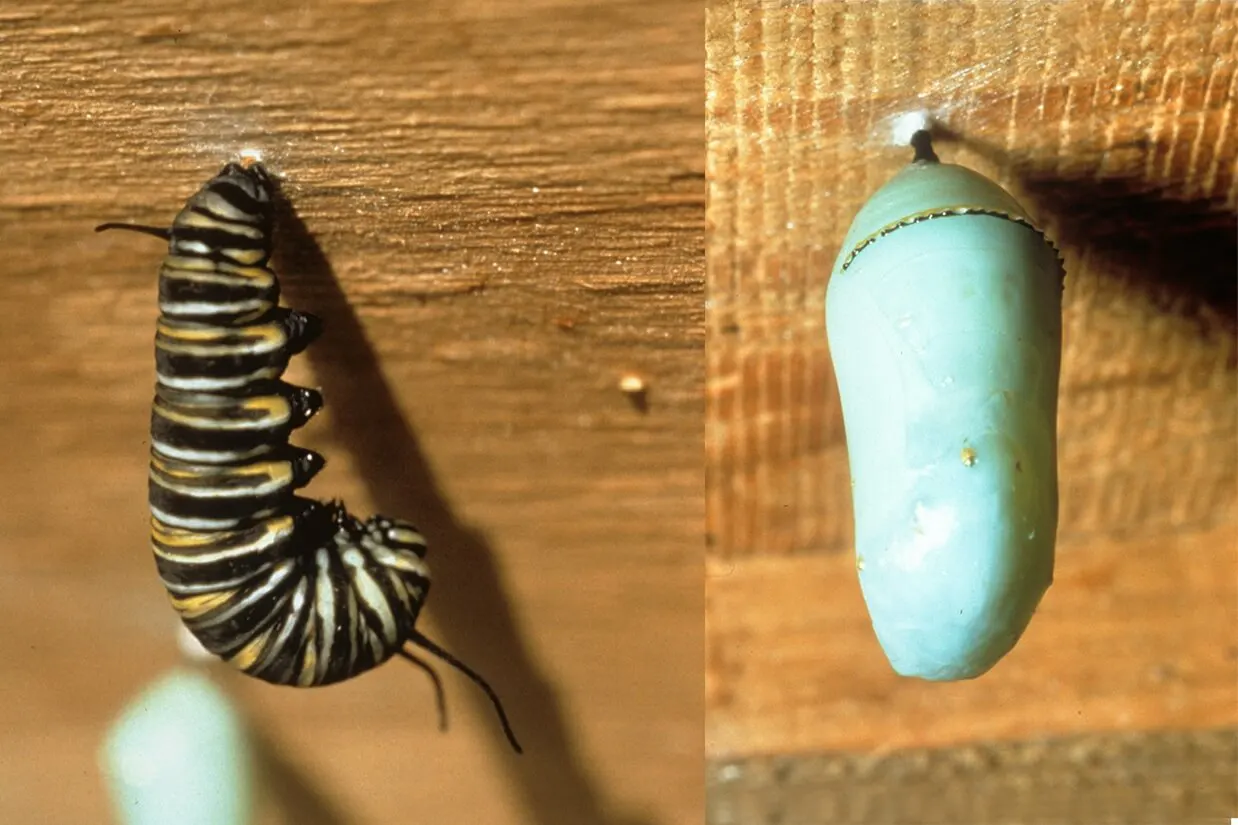
The life cycle photographs featured below are from the “Monarchs in the Classroom” program developed at the University of Minnesota. Grateful thanks to Karen Oberhauser and the Department of Ecology for permission to use these educational images.
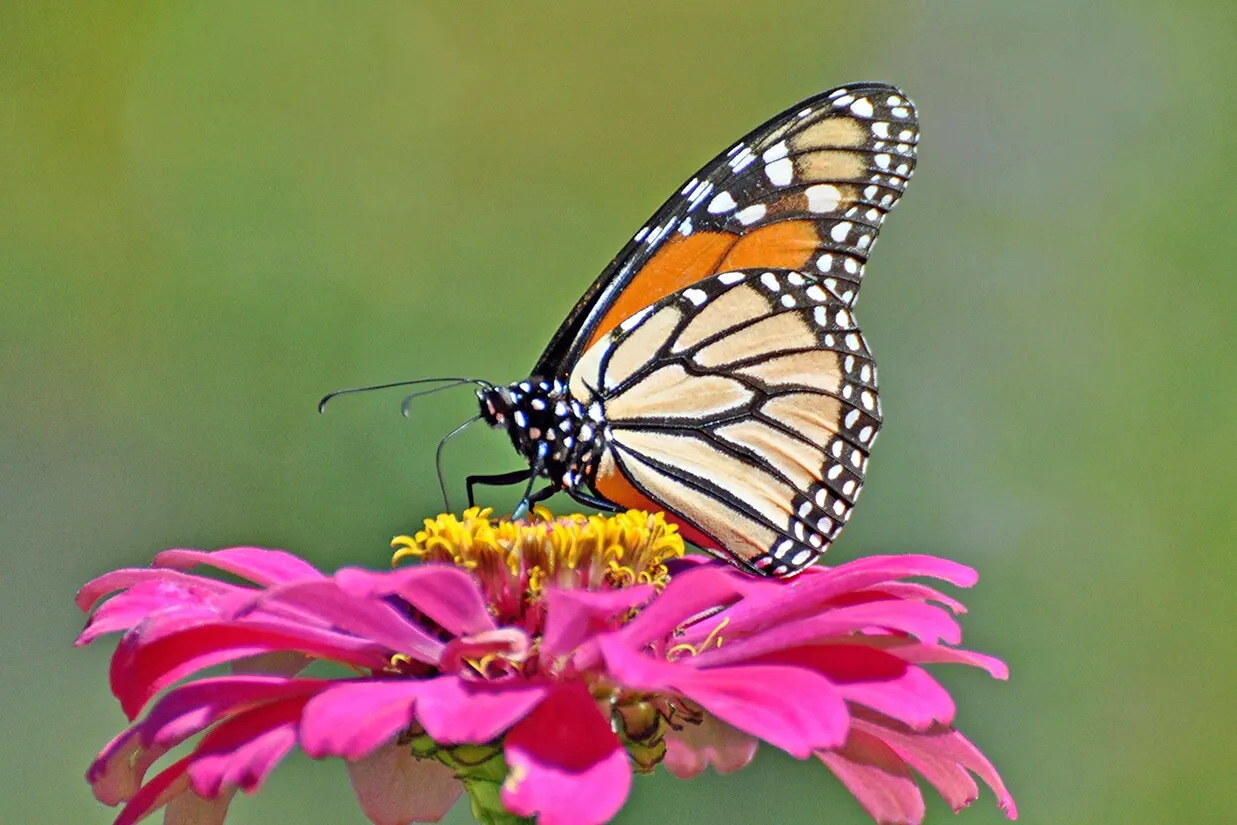
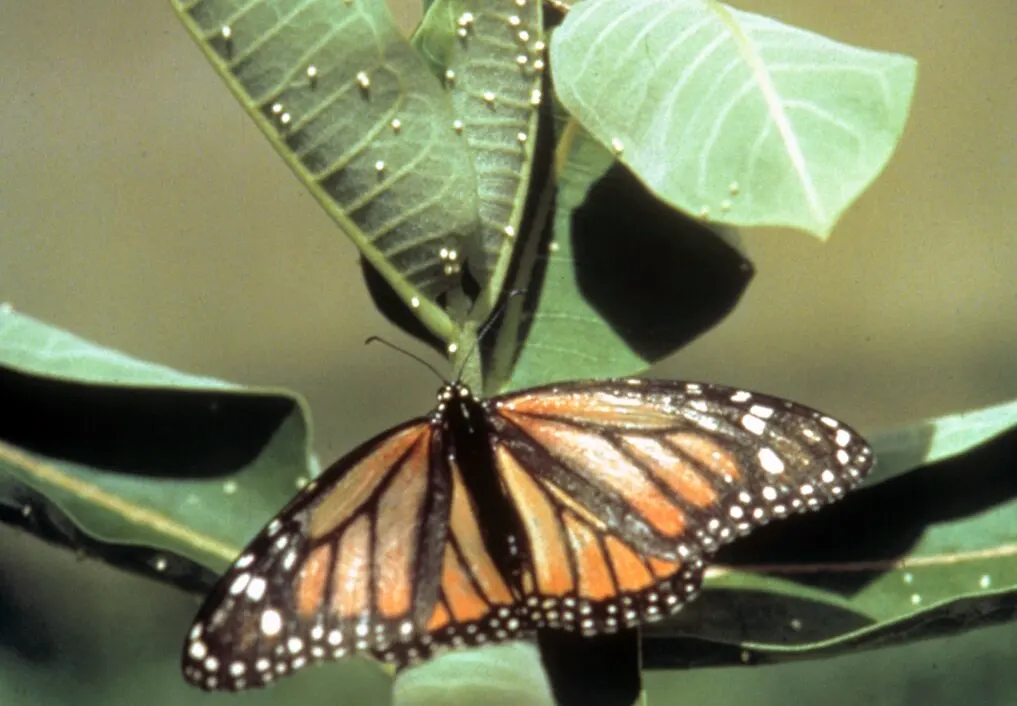
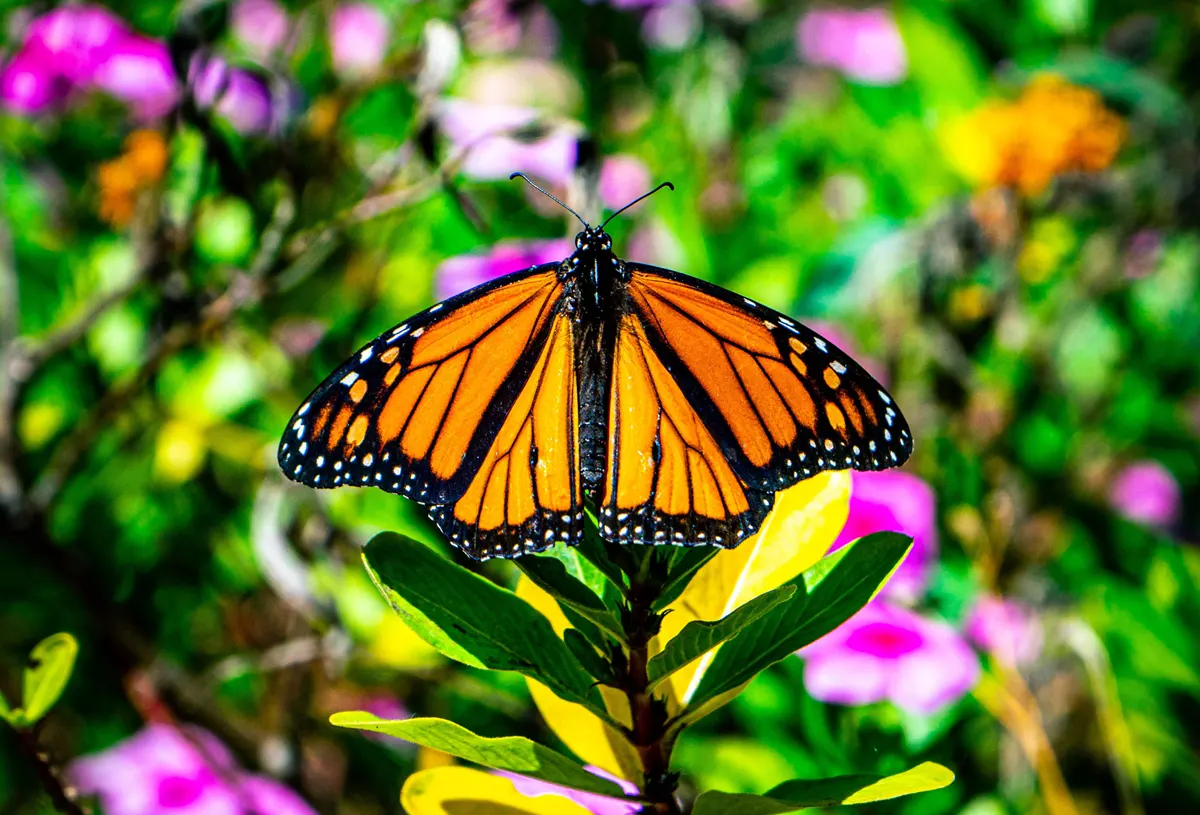
A monarch butterfly pausing to nectar from a bright zinnia
Metamorphosis of the Monarch Butterfly
Monarchs undergo complete metamorphosis — a four-stage transformation that allows each life phase to serve a different ecological purpose.
1. Egg
Female monarchs lay tiny, cream-colored eggs individually on milkweed leaves. Within a few days, a caterpillar emerges.
2. Larva (Caterpillar)
The caterpillar’s only task is to eat and grow. Feeding exclusively on milkweed, it stores energy and absorbs protective plant compounds that make it distasteful to predators. Over 10—14 days, it molts several times, increasing dramatically in size.
3. Pupa (Chrysalis)
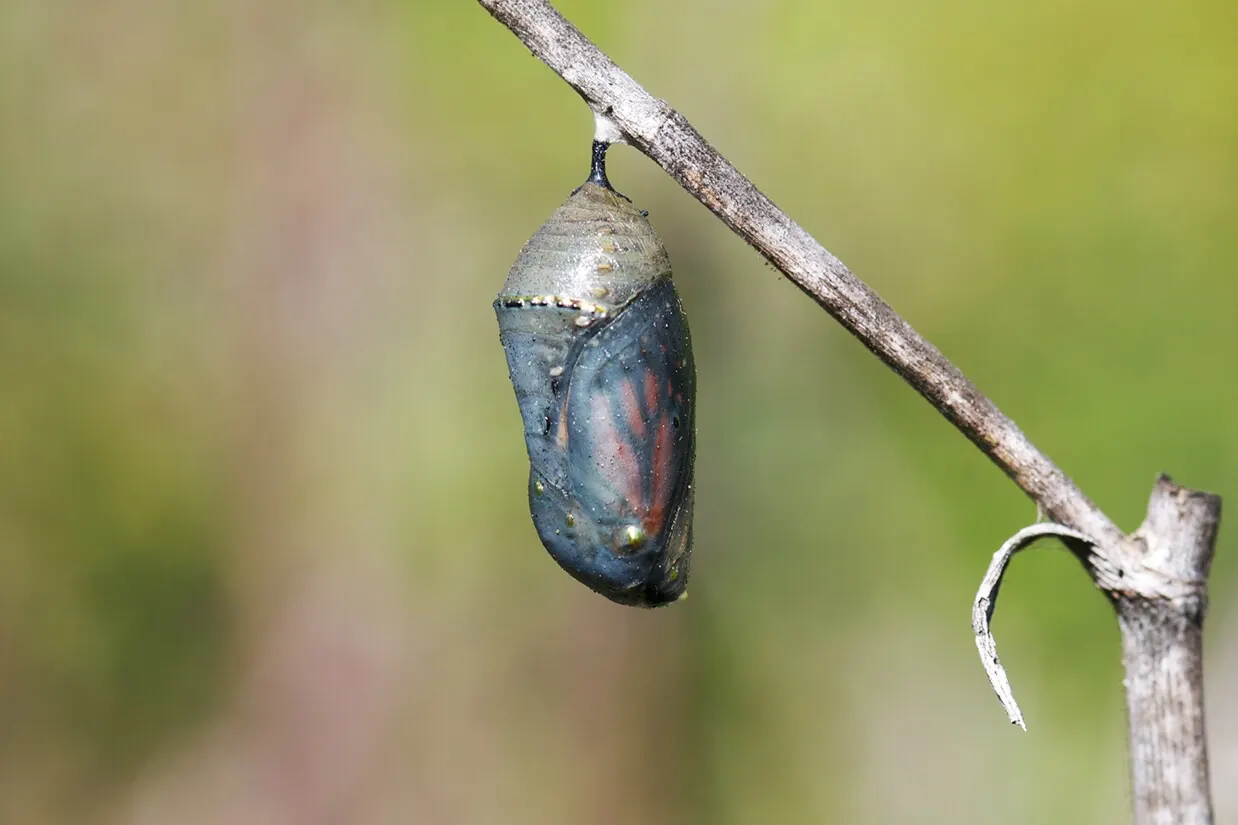
The caterpillar forms a jade-green chrysalis, often decorated with tiny gold dots. Inside, its body reorganizes completely — tissues dissolve and reform into wings, antennae, and adult structures.
4. Adult Butterfly
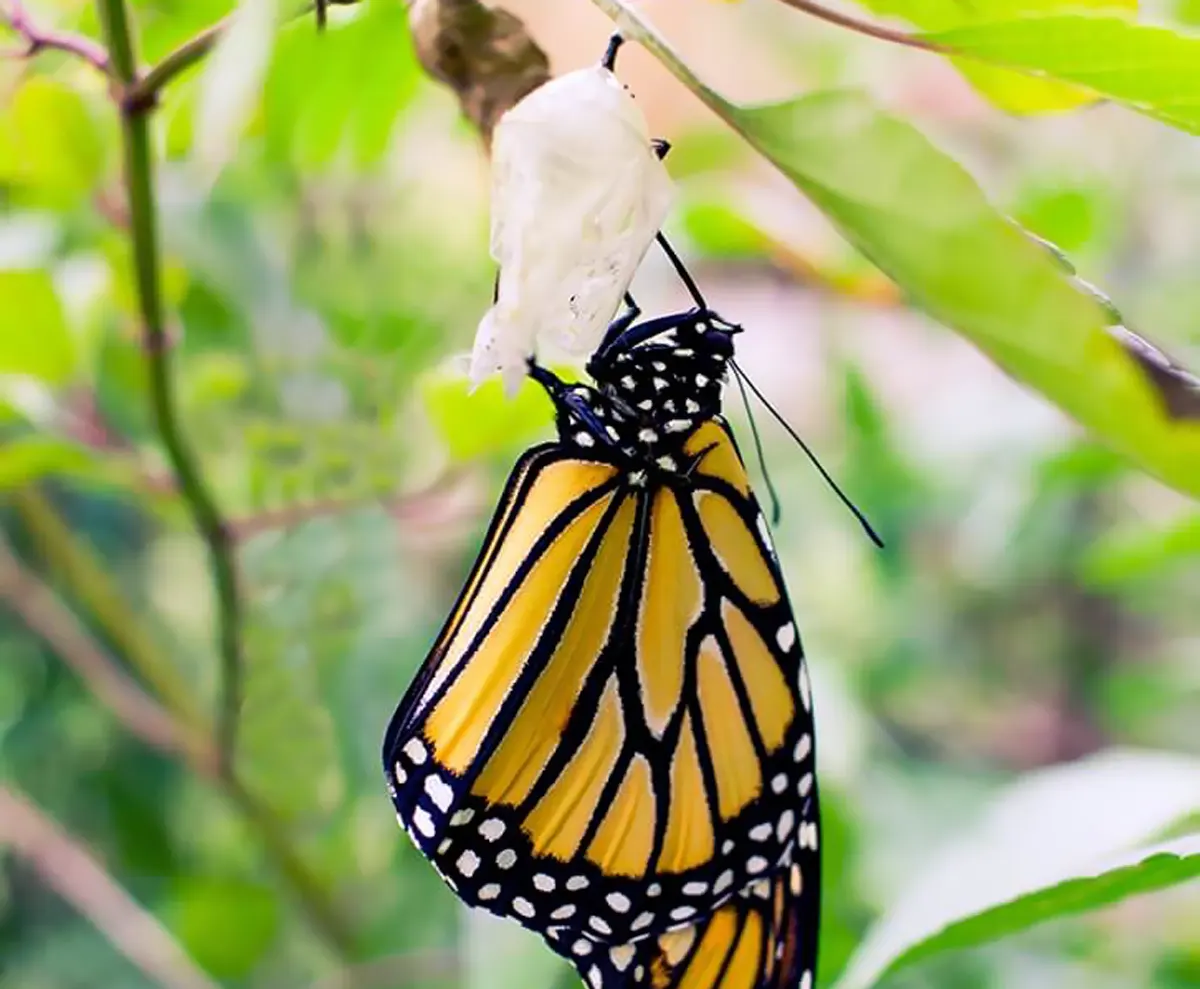
The newly emerged butterfly expands and dries its wings before taking flight. Adults feed on nectar from a wide range of flowering plants, fueling reproduction and migration.
Each stage is vulnerable — and each stage depends on habitat: milkweed for larvae, nectar for adults, shelter for protection.
Egg & Larva: The First and Hungriest Stages
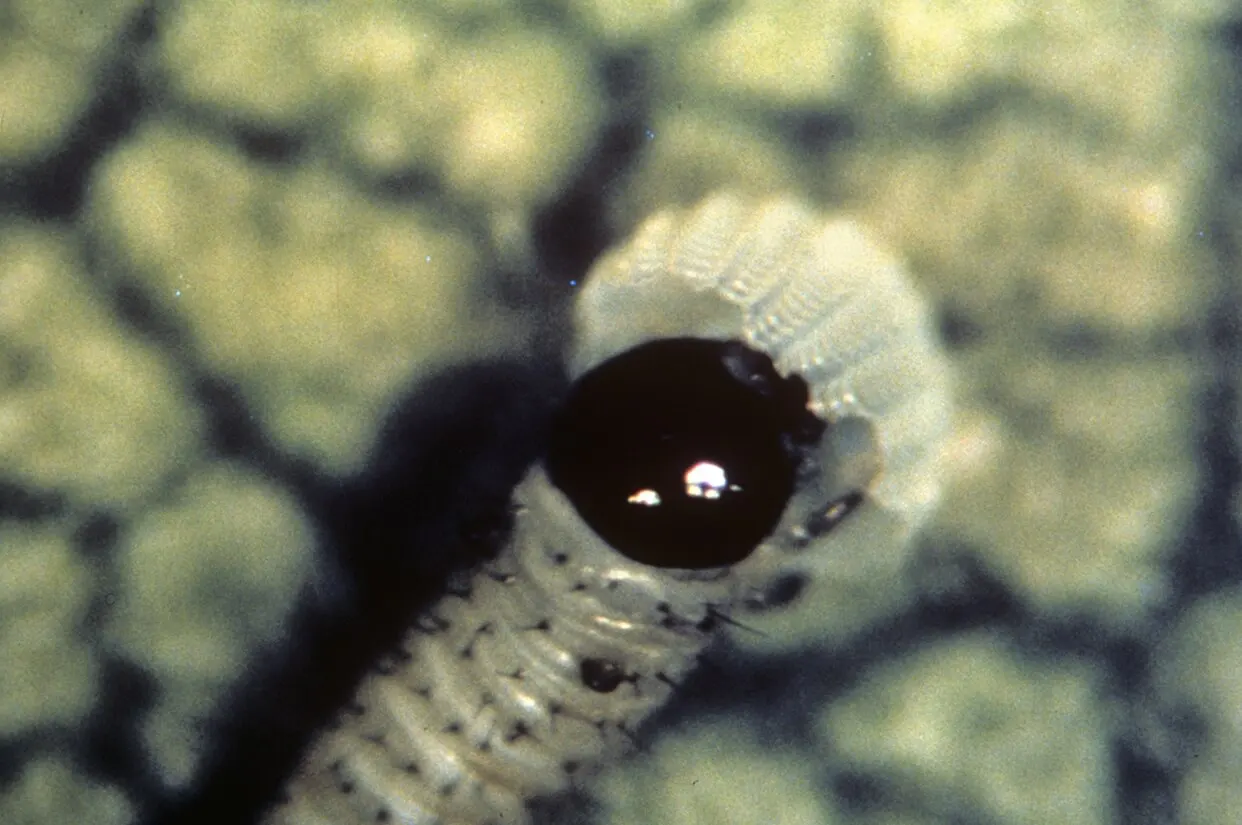
The monarch’s egg is pearly white and no larger than a pinhead. Under magnification, delicate ridges spiral toward the top. Within four to six days it darkens — a sign the tiny larva inside is ready to emerge.
When the caterpillar hatches, its first meal is its own eggshell, a valuable source of nutrients. It then begins feeding on milkweed leaves, carefully chewing between the veins to avoid the sticky latex sap. In its earliest days, the larva is extremely vulnerable, as it has not yet accumulated the plant’s protective toxins.
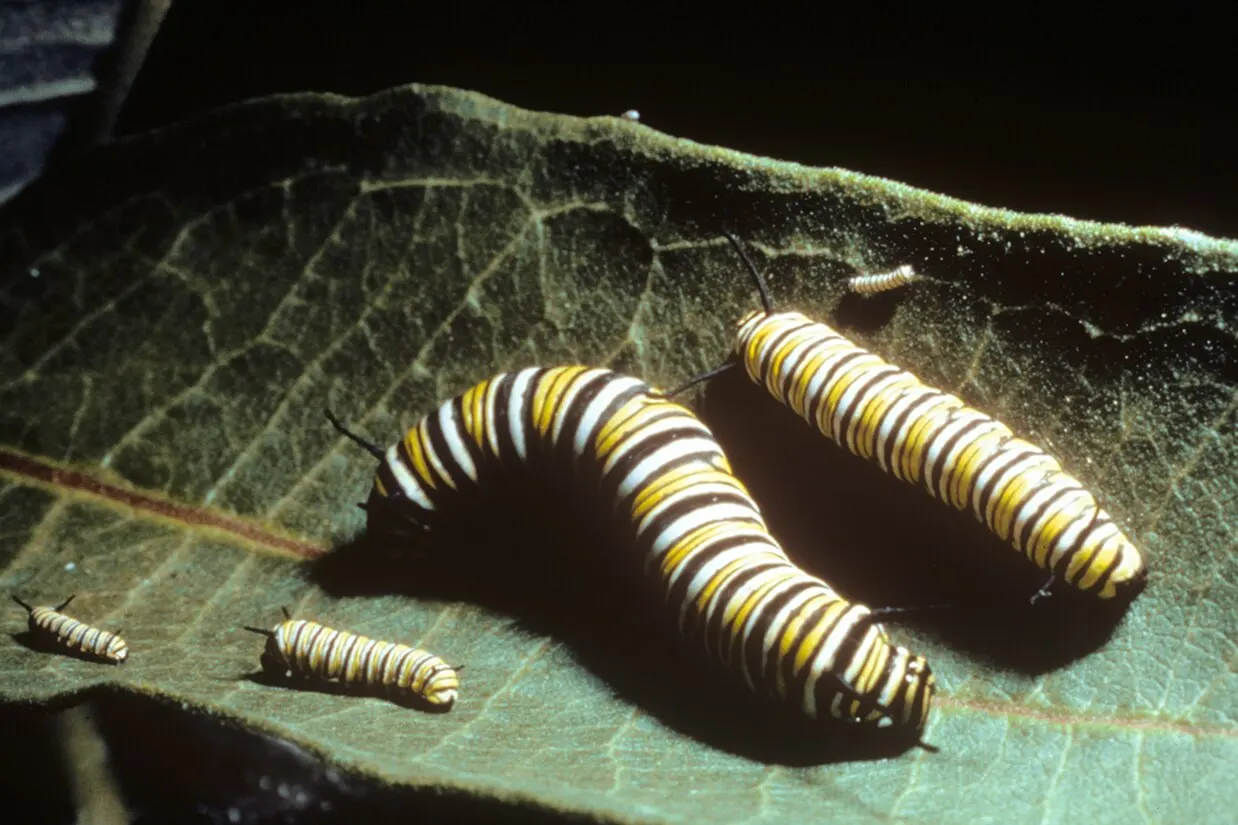
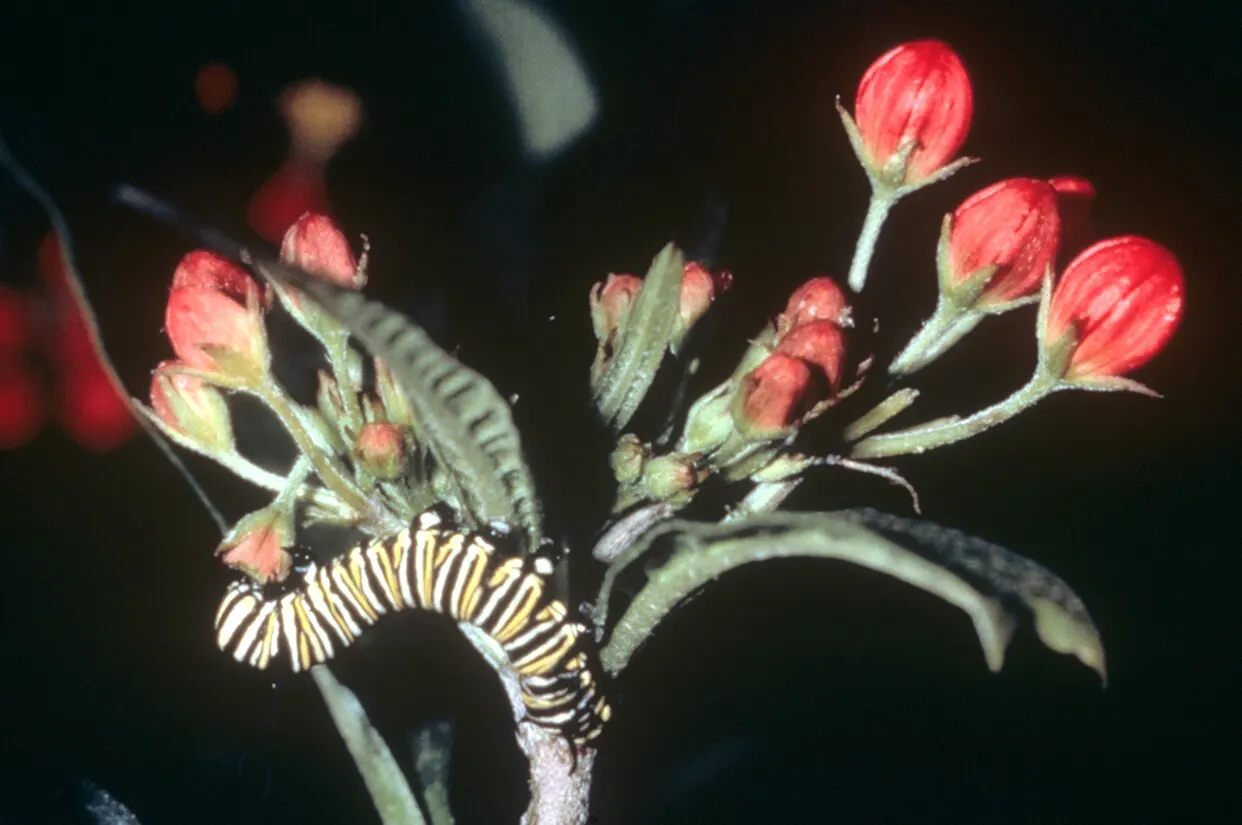
The caterpillar’s task is simple: eat and grow. Over 10—14 days it passes through five stages, or instars, increasing its body size by nearly 3,000 times. Specialized gripping structures called prolegs allow it to cling securely to leaves, and silk threads provide safety — helping it anchor during molts or lower itself away from danger.
Milkweed plants are resilient. Even after heavy feeding, they often regrow within weeks, continuing the cycle of life.
Pupa: Transformation in Stillness
When fully grown, the caterpillar leaves the milkweed to find a protected location. Hanging in a distinctive “J” shape, it sheds its final skin to reveal the chrysalis beneath.
Inside the green, gold-flecked casing, one of nature’s most extraordinary transformations occurs. The caterpillar’s body reorganizes into a butterfly through a complex process of metamorphosis. After about 10—14 days, the wings become visible through the translucent casing — a sign emergence is near.
When the butterfly finally ecloses, its wings are soft and crumpled. It must hang quietly as fluids pump through the wing veins, expanding and strengthening them. Only after several hours is it ready for flight.
This stage is both miraculous and fragile — vulnerable to predators, weather, and late-season cold.
Adult Butterfly: Winged and Working
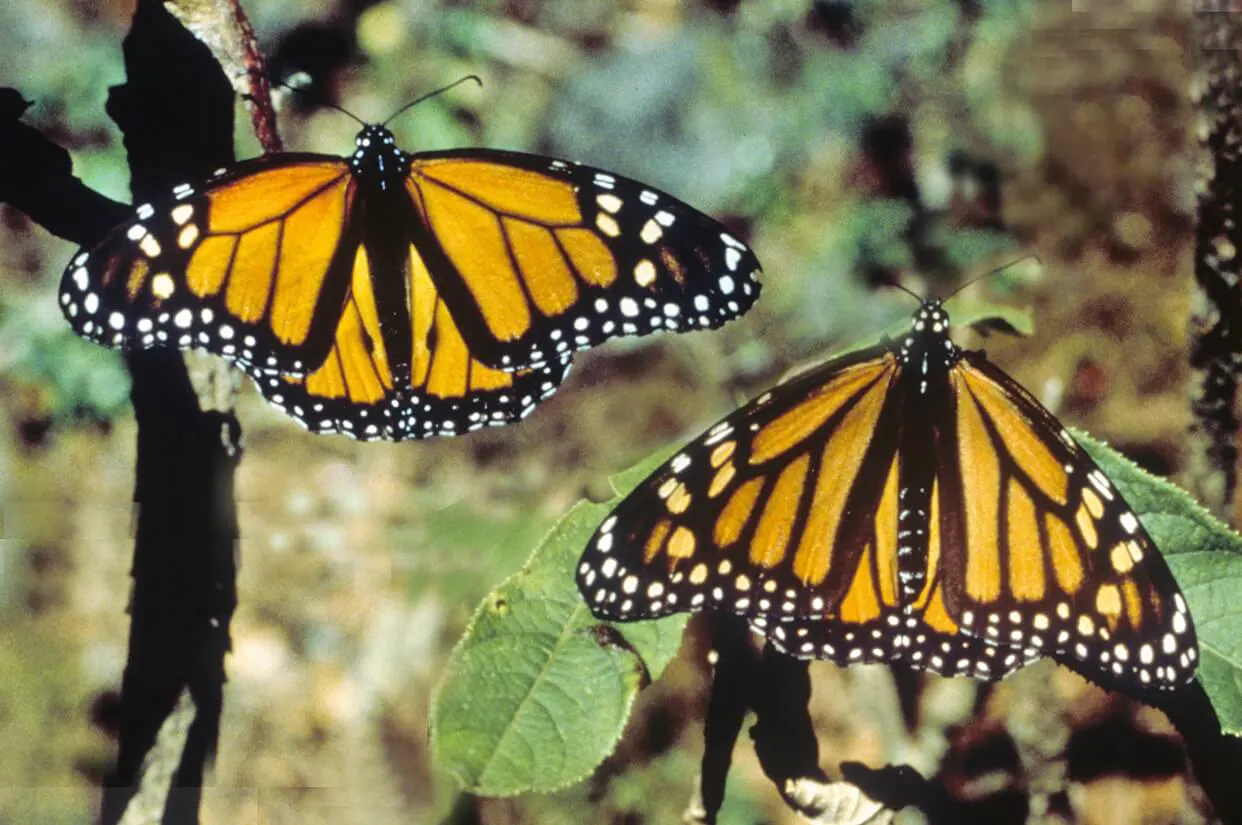
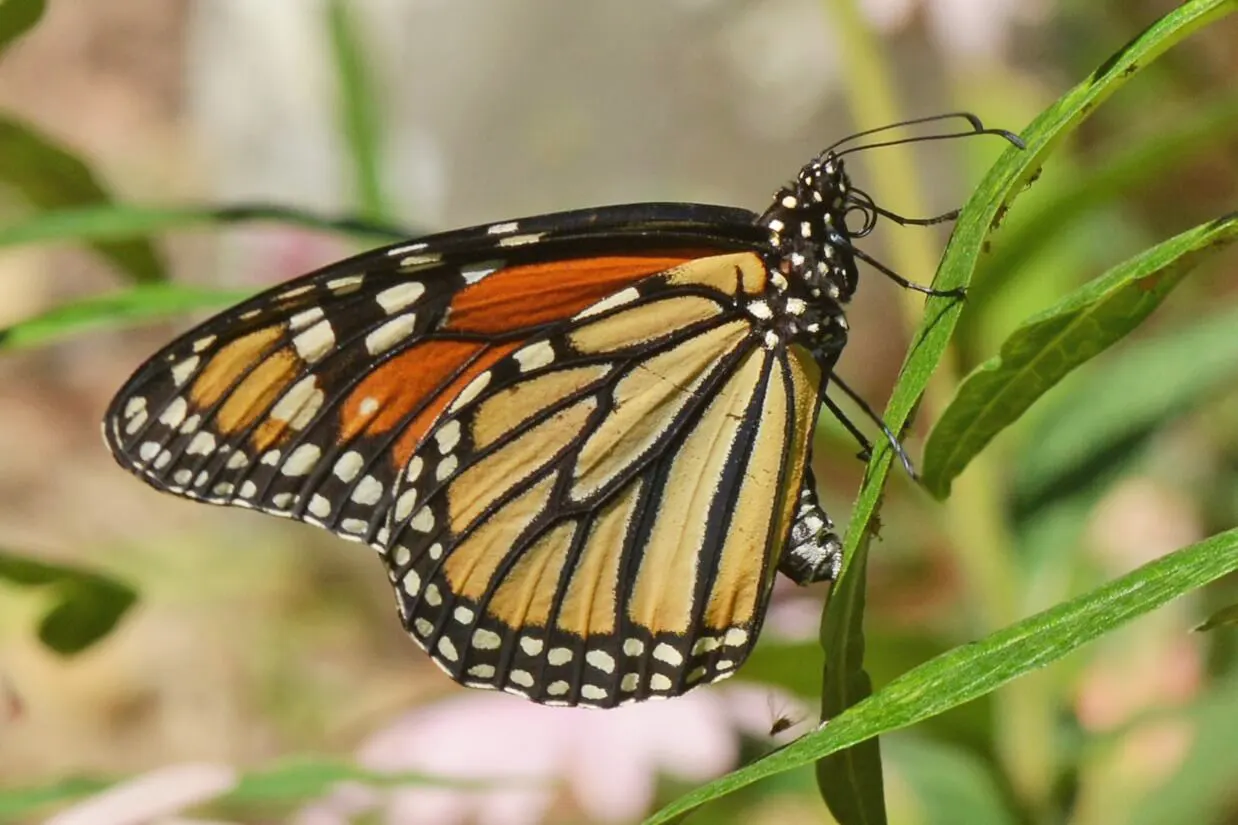
When the monarch emerges from its chrysalis, it is soft and fragile. Within hours, its wings expand and harden — revealing the brilliant orange and black pattern that makes it one of North America’s most recognizable butterflies.
Adult monarchs feed on nectar from a wide range of flowering plants. This energy fuels flight, reproduction, and — for some generations — migration. Their long proboscis acts as a delicate straw, reaching deep into blossoms.
Males and females can be distinguished by subtle markings: males have a small black scent gland on each hind wing and slightly thinner veins. After mating, females lay eggs exclusively on milkweed, beginning the cycle anew.
In warm months, monarchs live only two to six weeks — just long enough to mate and lay the next generation.
Except for one extraordinary generation.
Monarch Migration
Late in the summer, as days shorten and temperatures cool, a special generation of monarchs emerges. Unlike their parents, these butterflies do not immediately reproduce. Instead, they enter a state of reproductive pause and prepare for migration.
These monarchs may travel up to 3,000 miles — from the United States and Canada to overwintering forests in central Mexico, particularly in the mountains of Michoacán.
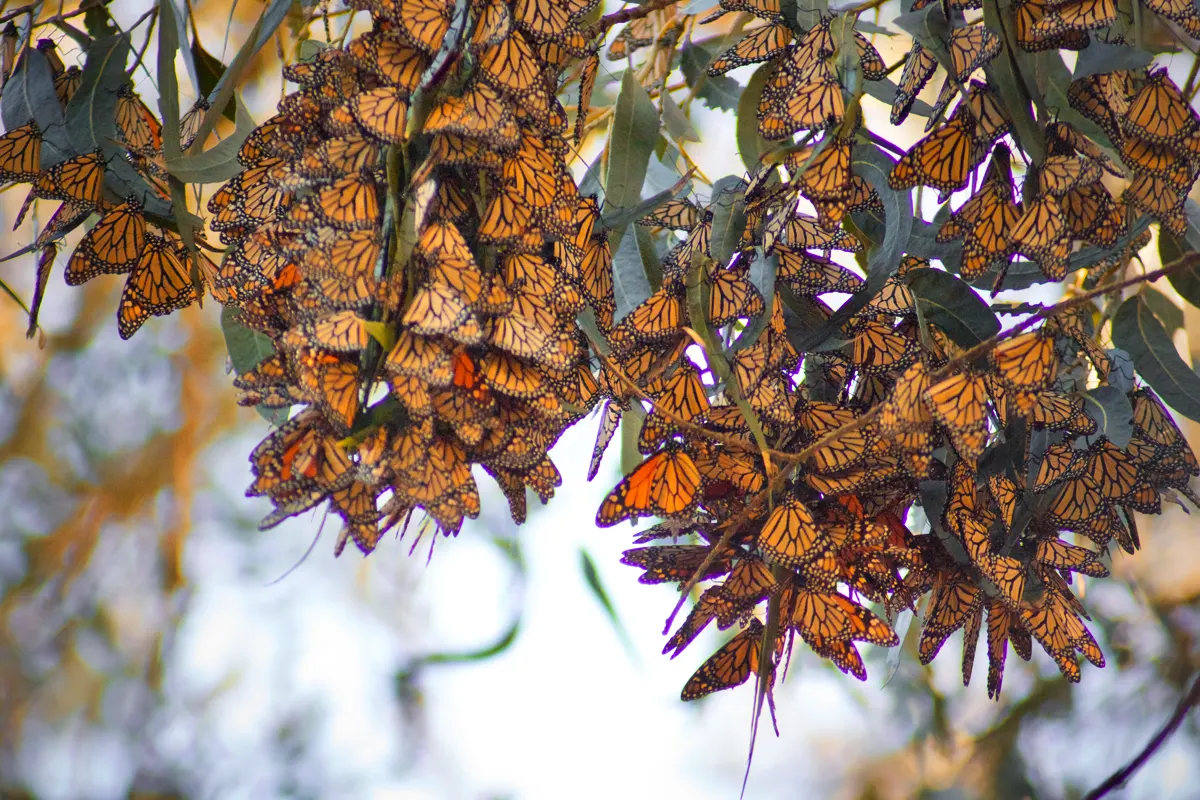
There, they gather by the thousands in oyamel fir forests, clustering tightly to conserve warmth. In spring, they begin the journey northward, laying eggs along the way. No single butterfly completes the full round trip; the migration spans multiple generations.
How monarchs navigate such vast distances remains one of nature’s marvels. Sun position, internal biological clocks, and even Earth’s magnetic field may all play a role.
Natural Enemies at All Stages
Surviving to adulthood is no small feat.
A single female monarch may mate three to six times and lay 300—500 eggs. Yet roughly 90% of eggs and newly hatched larvae are lost — primarily to invertebrate predators. Ants, true bugs, lady beetles and their larvae, lacewings, syrphid fly larvae, wasps, mites, spiders, and even cockroaches readily consume eggs and tiny caterpillars.
Larvae also face a more insidious threat: parasitoids. Certain braconid wasps lay eggs inside the caterpillar’s body, and at least a dozen species of tachinid flies use monarch larvae as living hosts for their developing young. These internal parasites often prove fatal.
Even the chrysalis is not safe. Predatory wasps may drill through the casing and feed on the pupa within.
As caterpillars grow, they accumulate toxic compounds from milkweed, making them distasteful to many predators. Their bold orange, black, and white striping serves as a warning — though young birds must learn through experience that these colors signal an unpleasant meal.
Adults are not exempt from danger. At overwintering sites, spiders, wasps, mantids, and dragonflies prey on resting butterflies. Mice and birds, including grosbeaks that selectively avoid the most toxic body parts, can remove a significant portion of clustered monarchs each winter.
Despite these losses, enough survive to continue one of nature’s most remarkable life cycles.
Monarchs in Marin County
About twenty years ago I used to see monarchs coming through Marin in the spring, usually March to April, heading to inland meadows where the milkweeds were plentiful, and then again in the late summer on their way back to the over-wintering sites. For the last ten or twelve years I only see them in Marin in the late summer and fall, usually late August through October. The females often still have eggs to lay and, if the warm weather holds, caterpillars can make it all the way through the metamorphosis and join their brethren at the over-wintering sites along the coast.
Boom and bust cycles are often the norm in insect populations, sometimes with fluctuations as drastic as ten to one. I personally think that the fires that raged in northern central California for months in the summer of 2018 may have had a dramatic effect on the monarch populations. Monarch larvae could well have been in that area when the fires started in June, and died as the fires burnt the grasslands and milkweeds, as well as scrublands and forests. Smoke in the air could have also had a deleterious effect on the adults, killing them by clogging their spiracles, or confusing their sense of direction, rendering them unable to make the return to the coast.
Conservation & Stewardship
Monarch populations have declined significantly in recent decades due to habitat loss, pesticide use, and climate pressures. Because their life cycle depends entirely on milkweed and diverse nectar sources, home gardens can play a meaningful role in their survival.
By planting regionally appropriate milkweeds, providing continuous bloom throughout the growing season, and maintaining pesticide-free landscapes, habitat gardeners become part of the monarch’s migration story.
Every egg laid on a backyard milkweed leaf is a small act of restoration.
Recommended Reading
Monarch Butterflies
Chasing Monarchs: Migrating with the Butterflies of Passage
Robert Michael Pyle; Yale University Press2014
Four Wings and a Prayer: Caught in the Mystery of the Monarch Butterfly
Sue Halpern; Vintage2002
Mariposa Road: The First Big Butterfly Year
R. M. Pyle; Yale University Press2013
A tale about finding as many butterfly species as feasible in one year.
Milkweeds, Monarchs and More, 2nd Ed.
Ba Rea, Karen Oberhauser, and Michael A. Quinn; Bas Relief LLC2011
The Monarch Butterfly: Biology and Conservation
Karen S. Oberhauser and Michael J. Solensky, editors; Comstock Publishing2004
A collection of scientific studies and essays covering breeding, migration, and overwintering biology.
Butterflies
Field Guide to Butterflies of the San Francisco Bay and Sacramento Valley Regions
A. Shapiro and T. Manolis; UC Press,2007
Truly specific to our region with lots of details on local species. The book also has good introductory information on butterflies, life histories, how to raise caterpillars, and local plants.
Back to Pollinators Waystation